
Franklin Parish Criminal Court Records
A criminal court record in Franklin Parish is the formal District Court file kept after prosecution begins. The Franklin Parish Clerk of Court states that the office preserves criminal records, juvenile records, non-support records, adoptions, appeals, and all court proceeding records. For criminal cases, that means the Clerk of Court is the practical record custodian for filed pleadings, minute entries, certified copies, expungement filings, and case documents available for public inspection.
Franklin Parish belongs to the Fifth Judicial District Court, which also serves Richland Parish and West Carroll Parish. The District Court is the main trial court for Franklin Parish felony prosecutions and qualifying misdemeanor matters that become District Court cases. Lower local courts may handle some municipal, justice-court, citation, or misdemeanor issues when locally created, but the full criminal case file for District Court matters is held through the clerk in Winnsboro. For a narrower view of filed counts and prosecution decisions, use the Franklin Parish arrest records and court charges page.
The Louisiana District Attorneys Association prosecutor directory identifies the Fifth Judicial District Attorney as the local prosecuting authority. That role matters because law enforcement can arrest a person, but the District Attorney decides what formal charges are accepted, filed, amended, reduced, or dismissed in court.
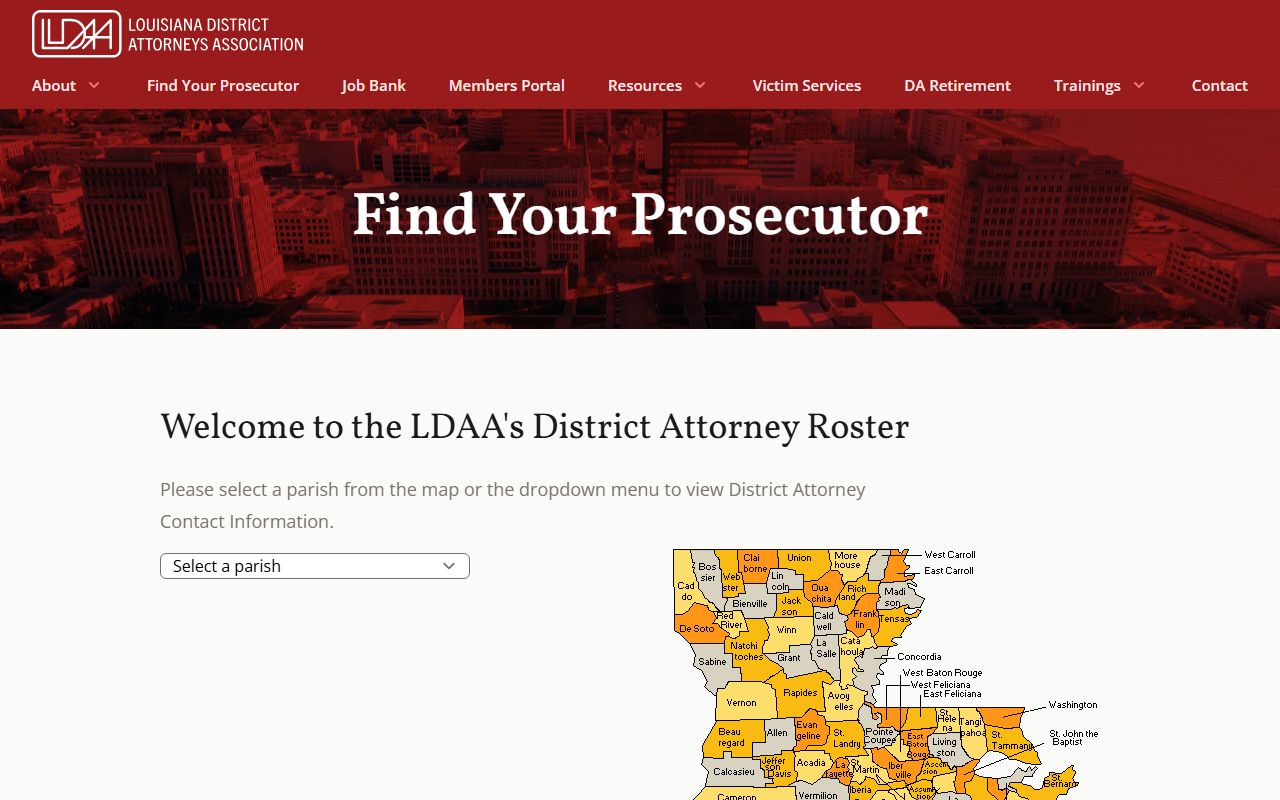
The prosecutor directory supports the local case-file distinction: the arrest starts with law enforcement, while the prosecuting office moves formal counts into the court record.
Search Franklin Parish Criminal Cases
Franklin Parish does not publish a dedicated county-branded criminal case search page on the clerk site. The official access path is a mix of statewide portal tools, clerk contact, courthouse inspection, and mailed public-records requests. The eClerks LA portal includes a Criminal Search module and parish functions, but the research did not confirm that full Franklin Parish criminal case images are publicly viewable online. Treat the portal as a locator and access channel, then confirm any result with the Clerk of Court before relying on it for legal use.
- Start with eClerks LA and use the Criminal Search module or parish tools where Franklin appears as an option.
- Search by defendant name or a known case number, and note any court, filing date, or case type returned.
- If the portal does not show the needed file, call the Franklin Parish Clerk of Court at 318-435-5133 or visit the courthouse counter.
- For a formal written request, mail Anita Wygal, Franklin Parish Clerk of Court, P.O. Box 1564, Winnsboro, LA 71295.
- Ask whether the item is open to inspection, available as a plain copy, or must be certified for use in another agency or court.
The clerk's resources page gives the public-records request mailing channel. The same research notes that court-reporter or transcript issues may require division-specific judge and court-reporter contacts. That is important when the wanted record is not a docket entry or filed pleading, but testimony, a hearing transcript, or a minute record tied to a specific division.
The local expungement path is documented on the Franklin Parish Clerk expungement page.
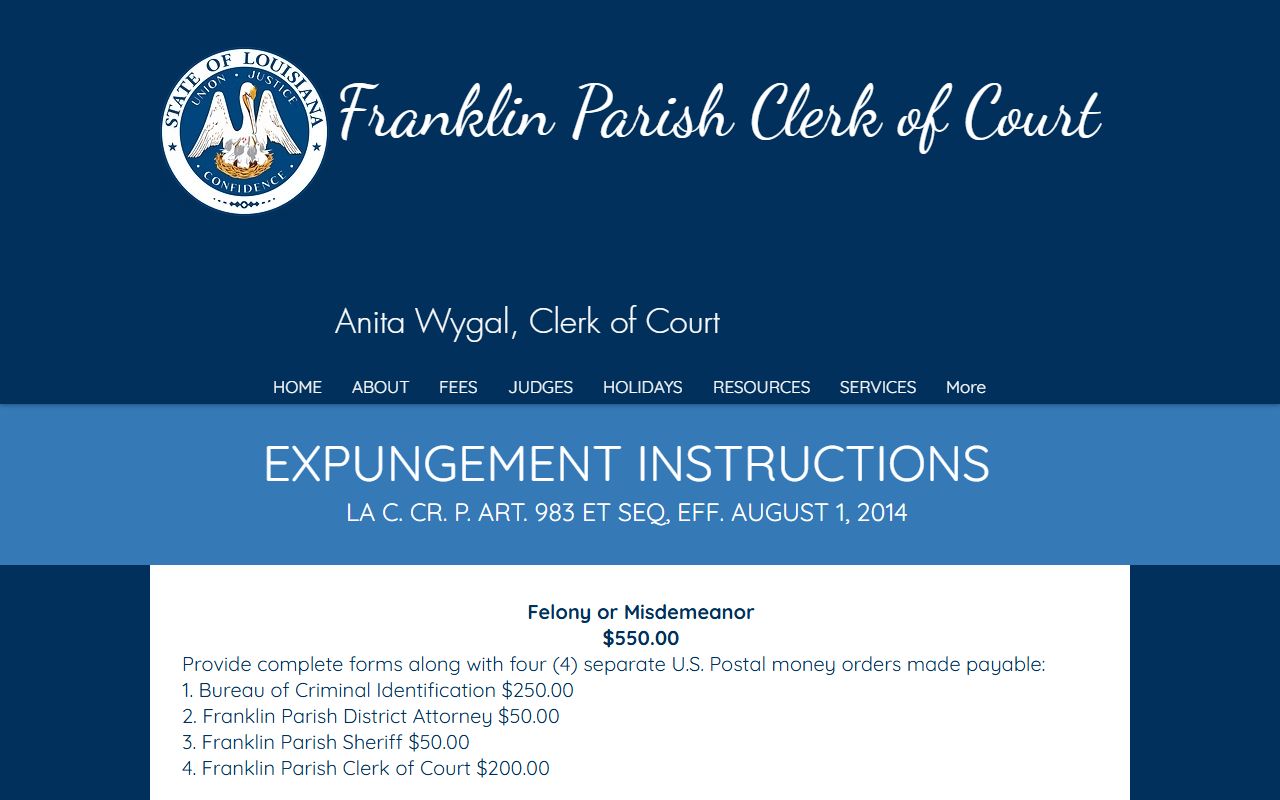
Expungement filings belong with the case record because they can change public access to the court, arrest, and prosecution materials connected to the same matter.
Franklin Parish Criminal Case Flow
A criminal court record grows as the case moves through the District Court process. Early entries may show the bill of information, indictment, arraignment, bond-related orders, counsel enrollment, and hearing dates. Later entries may show motions, continuances, plea minutes, trial activity, verdict, dismissal, sentence, restitution, probation, fines, and costs.
Case flow: Charges Filed › Arraignment › Pretrial and Motions › Plea or Trial › Disposition › Sentencing
| Stage | What the Franklin Parish record may show |
|---|---|
| Charges filed | A bill of information, indictment, or other charging document begins the prosecuted court case. |
| Arraignment | The defendant is called to answer the charge, and the plea may be entered in the minutes. |
| Pretrial and motions | The file can show counsel, discovery issues, continuances, bond orders, motions, and hearing dates. |
| Plea or trial | The record may show guilty plea terms, not guilty findings, verdicts, amended charges, or dismissed counts. |
| Disposition and sentencing | The court's final handling, sentence, probation, costs, restitution, or later expungement filing may appear. |
The Fifth Judicial District Attorney site is the local prosecution site listed in the official directory.
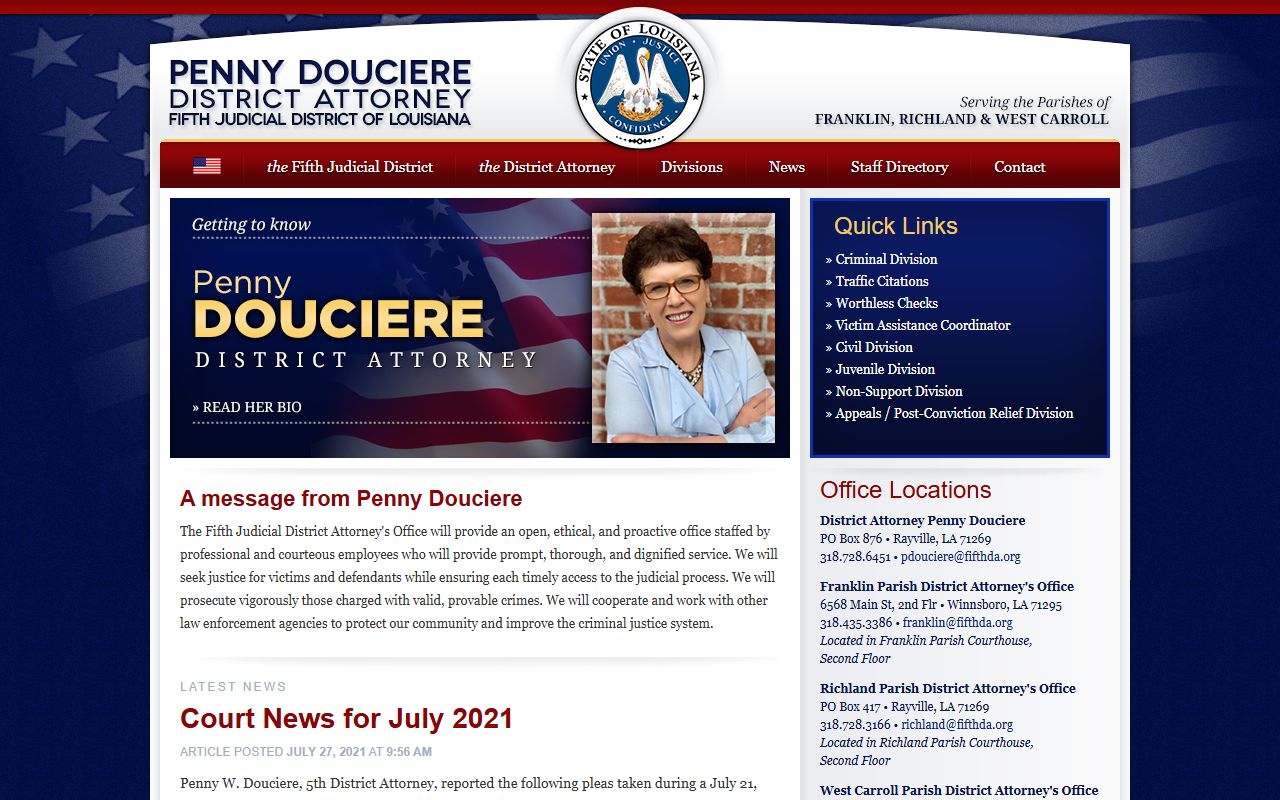
That office role helps explain why the court file may differ from a booking record: the filed case reflects the prosecutor's charging decision, not just the arrest event.
What Franklin Parish Criminal Records Show
The research did not locate a public Franklin Parish online sample case-detail page, so field format should be confirmed with the clerk for a specific file. Still, the clerk's stated record duties and Louisiana criminal terminology identify the core items that commonly appear in a District Court criminal file.
| Field | What it shows |
|---|---|
| Case number | The local docket or case identifier assigned by the Clerk of Court or court system. |
| Court and division | Fifth Judicial District Court, Franklin Parish, and sometimes Division A, B, or C. |
| Defendant and counsel | The person charged and the attorney of record, public defender, or counsel enrollment if filed. |
| Charges | Offense names, statute references, counts, amended charges, dismissed counts, or conviction offense. |
| Docket entries and minutes | Chronological filings, hearings, orders, continuances, pleas, sentencing, notices, and judgments. |
| Disposition | The final handling, such as dismissed, guilty plea, conviction, acquittal, transferred, closed, or expunged. |
| Sentence and financial terms | Jail or prison term, probation, restitution, fines, costs, bond entries, and copy or certification fees. |
| Documents and redactions | Pleadings, motions, warrants, returns, exhibits, transcripts, certified copies, and legally redacted data. |
Short terms matter. A minute entry is the clerk or court note of what happened on a court date. A disposition is the court's outcome for a case or count. A conviction is a plea or finding that establishes guilt, while a sentence is the punishment or conditions ordered after conviction.
Franklin Parish Charges vs Convictions
A filed charge is not proof that a person was convicted. A Franklin Parish criminal court record can include charges that were amended, reduced, dropped, dismissed, or ended in acquittal. The final disposition and sentencing entries are the places to check before treating a charge as a conviction.
| Point of comparison | Charge | Conviction |
|---|---|---|
| Meaning | A formal accusation filed or accepted for prosecution. | A guilty plea, verdict, or finding that establishes guilt. |
| Where it appears | Charging document, docket entries, arraignment minutes, and amended-count entries. | Disposition, plea minutes, verdict, judgment, and sentencing entries. |
| Can it change? | Yes. It can be amended, reduced, dismissed, or replaced. | It can be appealed, set aside, or affected by later relief, but it is the case outcome unless changed by court order. |
| Record use | Useful for tracking court charges after arrest, but incomplete without the outcome. | Needed for sentence, probation, restitution, and many official history questions. |
Use care with background checks. Public case lookups can be incomplete, and the legal notice at the footer explains the FCRA limits on using site information for regulated decisions.
Franklin Parish Criminal Record Access
Louisiana law starts with a broad public-records framework, but criminal court records are not open in every detail. A public adult District Court file may be inspectable through the clerk, while juvenile, adoption, sealed, expunged, victim-sensitive, and protected identifying information can be restricted. The practical rule is to identify the custodian first, then ask for the specific record type and copy format needed.
Key access rules: Louisiana Constitution art. XII, sec. 3 recognizes access to public documents, while La. R.S. 44:31 allows adults to inspect or copy public records unless a specific law restricts access.
Code of Criminal Procedure art. 972 defines expungement as removal from public access, not automatic destruction of every government copy.
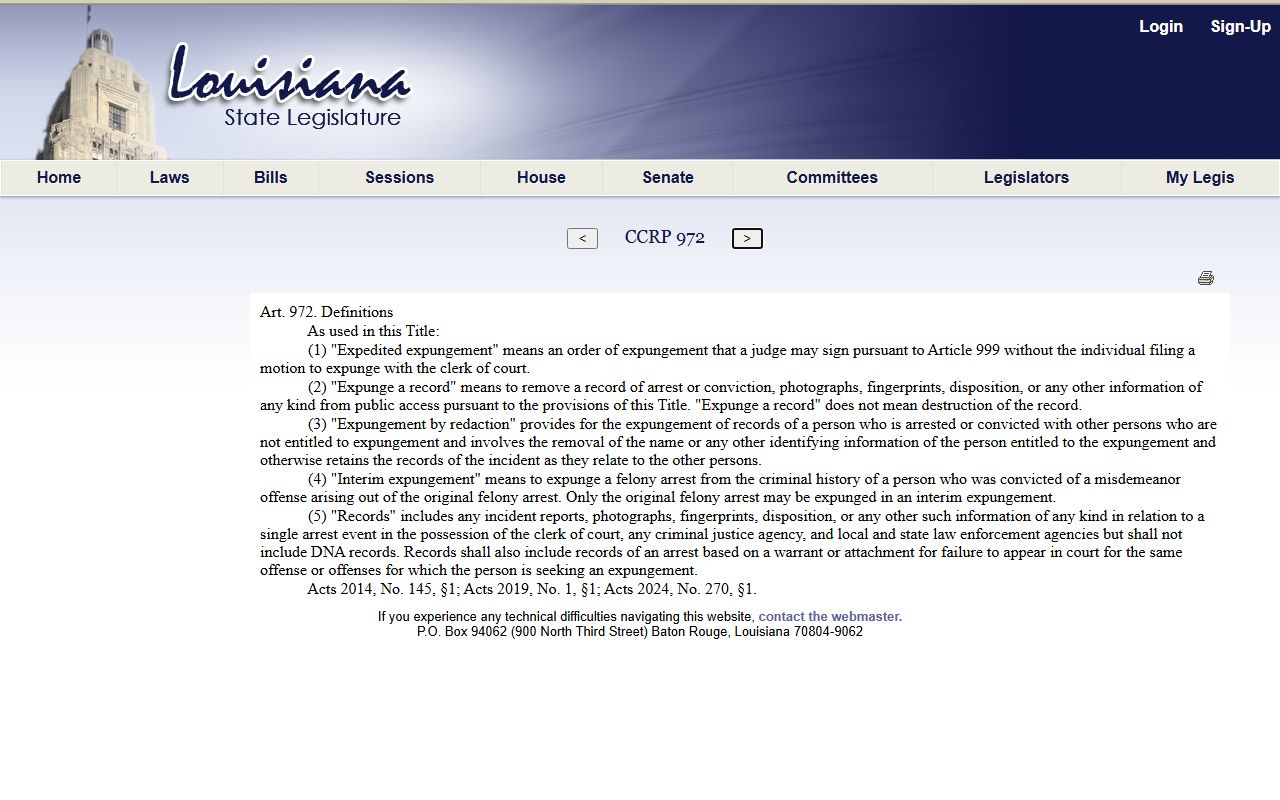
That distinction is central for Franklin Parish criminal court records because a case can become hidden from public access while still remaining available to courts, prosecutors, law enforcement, or other authorized agencies.
Sealed and Expunged Criminal Records
Louisiana uses sealing and expungement concepts to restrict public access to criminal materials. The research states that Franklin Parish expungement filings run through the Clerk of Court and the District Court case or arrest record. A requestor should gather the arrest date, agency, docket or case number, disposition, and identity information before contacting the clerk.
| Point of comparison | Sealed | Expunged |
|---|---|---|
| Public visibility | Public access is restricted by law or court order. | The covered record is removed from public access and treated as confidential. |
| Record existence | The file may still exist under restricted access. | Louisiana expungement generally does not mean physical destruction of every record. |
| Government access | Courts or agencies may retain access when authorized. | Law enforcement, prosecutors, courts, and specified agencies may have limited access. |
| Franklin Parish path | Ask the custodian or court about the order controlling access. | Check the clerk's local expungement instructions and state eligibility rules. |
Code of Criminal Procedure art. 973 explains the confidential effect of expungement. Defense access matters here because expungement, sealing, plea terms, and sentence review often require counsel or careful review of the original criminal case file.
Franklin Parish Restricted Criminal Files
Some criminal-related records should not be expected in a public search. Louisiana Children's Code art. 412 makes juvenile court records confidential except for traffic violations or access authorized by law. Adoption files are not ordinary public case files. Personal identifiers, victim information, financial account data, protected addresses, and sensitive minor information may be redacted from copies.
The Louisiana Office of the State Public Defender provides statewide oversight for indigent defense.

For Franklin Parish, District 5 public defender service is separate from the Clerk of Court record function, but it can be relevant when a pending case, plea, warrant, or expungement question requires legal help.
The District 5 public defender page lists service for Franklin, Richland, and West Carroll parishes, with District Defender J. Albert Ellis and the Rayville office contact.
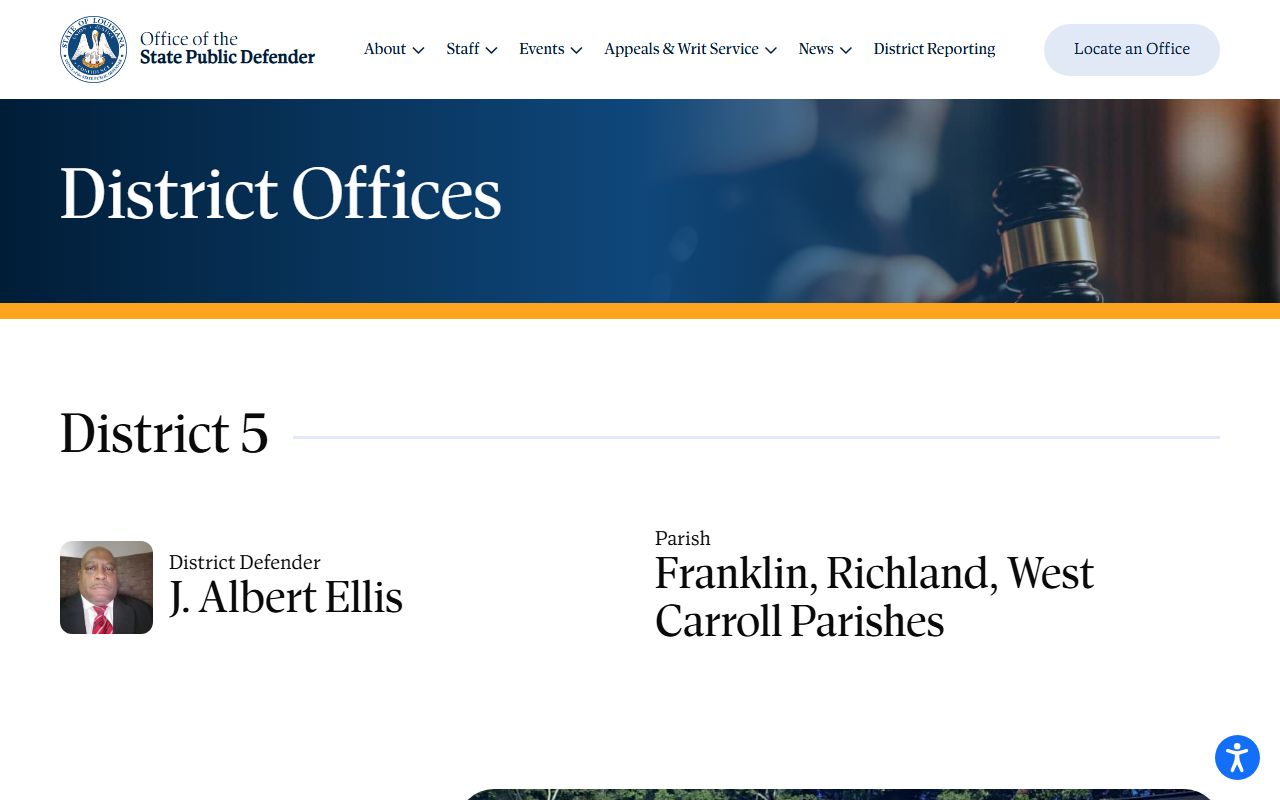
That office does not replace the clerk as the record custodian, but it is part of the local criminal case ecosystem when counsel is needed.
Note: A certified court copy should come from the Clerk of Court, not from a screenshot or unofficial search result.